

Sensors, Encoders, Detection & Measurement
for Agriculture & Forestry Vehicles
Your Vehicles Rely on Knowing Exactly Where They Are
Modern tractors incorporate dozens of measurement points, from engine speed to hitch position. Every data point influences decisions made by onboard electronic systems. An inaccurate measurement can be more costly than no measurement at all, as it leads the system to make the wrong decision.
On a forestry carrier operating in muddy, demanding conditions, ensuring measurement reliability becomes a critical design challenge.
Find your solution
Our Measurement and Detection Technologies
Magnetic Encoder Rings
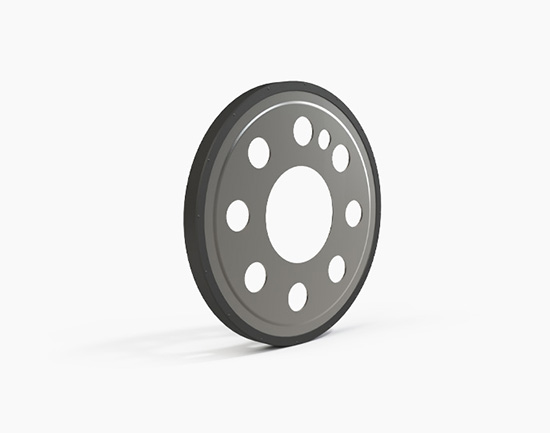
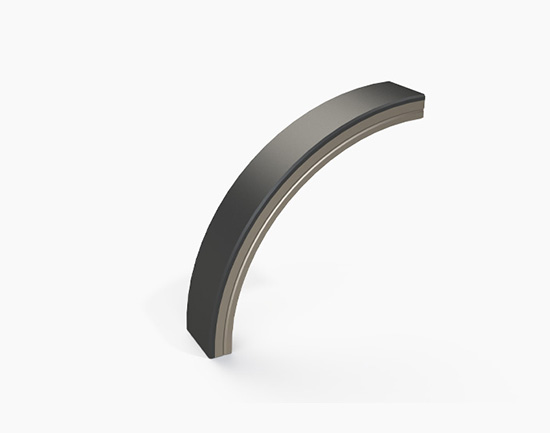
We design and manufacture encoder rings composed of a metal insert and an elastomer loaded with magnetic particles. Combined with a sensing probe, they provide accurate speed and position data on rotating shafts.
Their key advantage for mobile equipment lies in their integration capability. They can be incorporated directly into an existing sealing function, reducing component count while simplifying system design.
Dual-Track Encoder Rings for Absolute Position Measurement
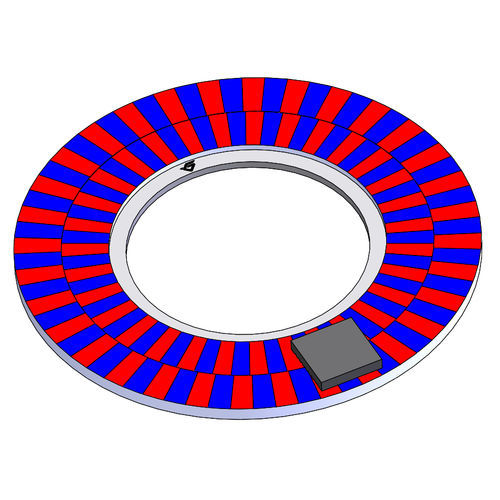
Certain vehicle functions require the exact position to be known immediately at power-up, without any prior movement or calibration sequence. To meet this requirement, we offer dual-track magnetic encoder rings.
The primary track contains multiple pole pairs and delivers highly accurate position information, while the secondary track contains one fewer pole pair. By calculating the difference between the two signals, the system determines the absolute position.
This technology is already used in medical robotics and automated production systems, industries where accuracy and reliability are critical.
Absolute Inductive Sensors
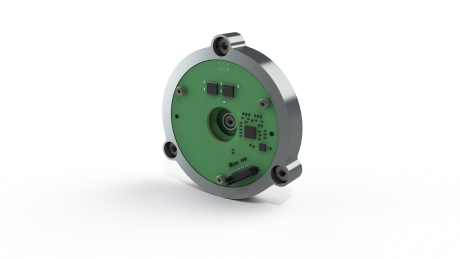
Our inductive sensing technology is based on eddy current principles, providing a decisive advantage for mobile machinery.
It is inherently immune to low-frequency stray magnetic fields, a critical benefit when sensors operate near electric drives, alternators, or other sources of electromagnetic interference.
In addition, we design each sensor with its installation environment in mind, enabling seamless integration into your system architecture rather than forcing design constraints on your equipment.