- Sealing Solutions
- Sealing Solutions
Bipolar Plates
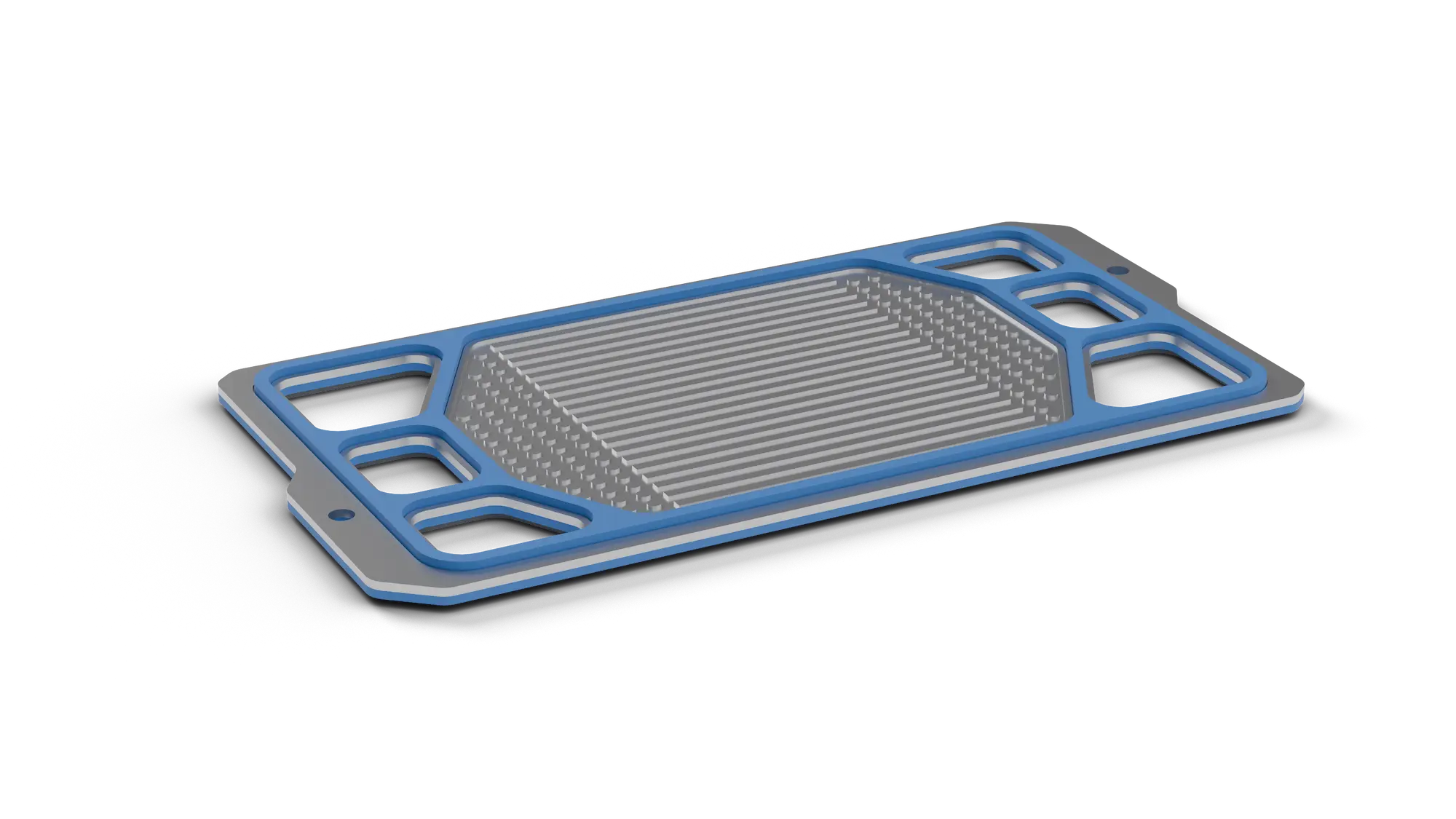
Bipolar plates (BPP) for fuel cells ensure optimum electrical conductivity and efficient fluid management. The rubber overmoulding seals the assembly and optimises the cell pitch.
We develop coatings that maintain conductivity and improve the plates’ corrosion resistance. Sealing and fluid distribution are ensured by rubber materials developed and validated for industrial applications.
Sealing capable of withstanding pressures of up to 30 bar, from -50 °C to +250 °C
Low permeability and high chemical resistance
- High electrical conductivity and corrosion resistance
- Overmoulding that integrates the seal without the need for an additional assembly step
- Optimisation of cell pitch and membrane-electrode assembly (MEA) performance
Applications
- Hydrogen production and use
- Fuel cells
- Series of fuel cell and electrolyser programs
- Seal design tailored to the requirements of the application (components, operating pressures, etc.)
Characteristics
- Sealing bipolar plates with a pressure resistance of up to 30 bar
- Temperature range: -50 °C to +250 °C
- Low permeability of the rubbers and high chemical resistance
- Rubber formulation suited to the hydrogen fuel cell environment
- Acid- and moisture-resistant materials and elastomers
- Surface coatings optimized for corrosion resistance and electrical conductivity of the bipolar plates
- Good chemical performance of the battery thanks to a low ionic leaching rate
Strengths
- Improved service life and performance
- Resistance to acid and moisture
- Optimization of cell spacing using FEA calculations
- Compliance with functional and assembly requirements
- Plates with integrated gasket for simplified assembly
Resources & documentation

Easy assembly

Enhanced Performance

Durability

Protection in hostile environments

Compactness
Sports & Leisure
Railway
Energies
Machines Industrielles
Urban Mobility